
Blog
How to Control Appetite Naturally: Proven Methods to Reduce Hunger and Cravings
21
Jan
Jan
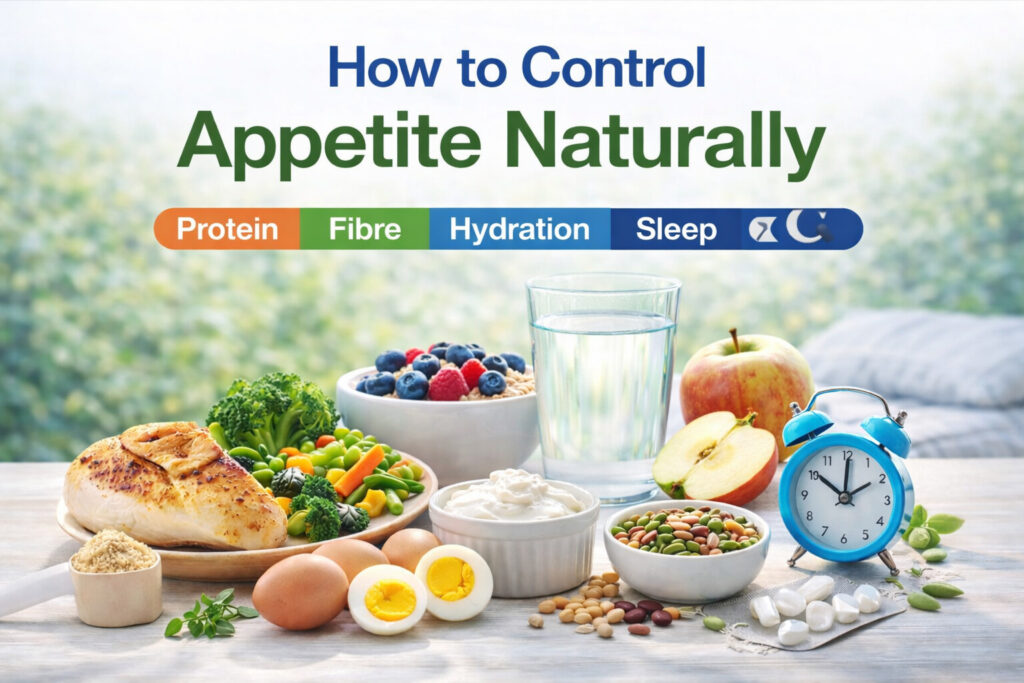
Appetite control becomes easier when your meals, sleep, hydration, and daily routine support stable hunger signals. Natural appetite control focuses on reducing cravings, improving fullness, and preventing energy crashes that trigger overeating.
This guide explains practical ways to control appetite naturally, without relying on extreme dieting.
Why You Feel Hungry (Even After Eating)
Hunger is influenced by more than stomach emptiness. Appetite increases when the body detects low energy availability or unstable blood sugar patterns. Appetite also increases when sleep quality drops or stress levels rise.
Common triggers include:
- Skipping meals
- Low protein intake
- High sugar intake
- Poor sleep
- Stress eating
- Dehydration
- Highly processed foods
To reduce hunger, follow these beginner-friendly rules in order:
1) Eat More Protein at Every Meal
Protein improves fullness and reduces hunger between meals. Protein also supports muscle retention during weight loss, which supports metabolism and body composition.
Best protein options
- Eggs
- Chicken, turkey, lean meat
- Fish
- Greek yoghurt
- Cottage cheese
- Lentils and beans
Simple target
Add a protein source to breakfast, lunch, and dinner.
2) Increase Fibre Intake (The “Fullness Nutrient”)
Fibre slows digestion and supports longer-lasting fullness. Fibre also supports gut health and better digestion patterns.
High-fibre foods
- Oats
- Chia seeds
- Vegetables
- Berries
- Beans and chickpeas
- Whole grains
Tip
Increase fibre gradually and drink more water to reduce bloating.
3) Drink Water Before Meals
Hydration affects appetite signals. Mild dehydration can feel like hunger, which increases snacking.
Simple method
- Drink 1 glass of water 10–15 minutes before meals
- Keep water visible during the day
4) Build Meals Around Whole Foods
Whole foods support stable hunger control because they contain protein, fibre, and volume. Processed foods often increase cravings because they digest quickly and trigger repeat hunger.
Whole-food meal examples
- Chicken + rice + vegetables
- Eggs + oats + fruit
- Tuna salad + potatoes + greens
- Lentil curry + vegetables
5) Reduce Liquid Calories
Liquid calories reduce appetite control because they add calories without strong fullness. Sugary drinks also increase cravings.
Common appetite disruptors
- Fizzy drinks
- Sweetened coffee drinks
- Fruit juice
- High-sugar smoothies
Better swaps
- Water
- Black coffee
- Unsweetened tea
- Sparkling water
6) Control Sugar Spikes to Reduce Cravings
High-sugar meals often cause fast energy spikes and crashes. Crashes increase hunger and increase snack cravings.
Simple ways to reduce sugar cravings
- Add protein to carb meals
- Choose high-fibre carbs
- Avoid sugary snacks on an empty stomach
7) Eat More Volume for Fewer Calories
High-volume meals create fullness with fewer calories. This reduces hunger without extreme restriction.
High-volume foods
- Vegetables
- Soups
- Salads
- Berries
- Potatoes (boiled or baked)
8) Sleep More to Control Hunger Hormones
Poor sleep increases hunger and reduces self-control around food. Sleep loss also increases cravings for high-calorie snacks.
What helps
- Consistent bedtime
- Reduced screen time before sleep
- Lower caffeine intake after midday
9) Manage Stress to Reduce Emotional Eating
Stress increases cravings and increases overeating risk. Emotional hunger often feels sudden and specific, such as cravings for sweets or salty foods.
Quick stress-control habits
- Walk for 10 minutes
- Deep breathing for 2 minutes
- Short breaks between tasks
- Keep snacks planned, not random
10) Eat Slowly and Remove Distractions
Fast eating reduces fullness signals. Slower eating helps the body register satisfaction.
Simple rule
- Eat without scrolling
- Chew properly
- Pause between bites
11) Plan Snacks Instead of Fighting Hunger
Planned snacks improve control. Unplanned snacks increase overeating.
Better snack options
- Greek yoghurt
- Fruit + nuts
- Protein shake
- Boiled eggs
- Cottage cheese
12) Use Meal Timing That Fits Your Routine
Appetite control improves when meals follow a consistent schedule. Skipping meals often leads to overeating later.
Simple structure
- Breakfast
- Lunch
- Dinner
- 1 planned snack if needed
Appetite Control Foods That Work Best
These foods help reduce hunger naturally:
- Eggs
- Oats
- Potatoes
- Greek yoghurt
- Chicken breast
- Beans and lentils
- Vegetables
- Apples and berries
- Nuts (controlled portions)
Common Mistakes That Increase Hunger
These habits make appetite harder to control:
- Skipping breakfast and overeating later
- Eating low-protein meals
- Too many refined carbs
- Not drinking enough water
- Sleeping too little
- Stress eating without structure
FAQs: Controlling Appetite Naturally
Frequently Asked Questions About How to Control Appetite Naturally
How do I stop feeling hungry all the time?
Increase protein and fibre, drink more water, and improve sleep. Hunger often reduces when meals become more structured.
What reduces appetite quickly?
Water before meals, high-protein meals, and high-volume foods reduce hunger quickly.
Why do I crave sweets at night?
Late cravings often link to low sleep, stress, or low protein intake during the day.
Do supplements help appetite control?
Some supplements support appetite control, but diet structure and sleep have a bigger impact.
Final Summary
Natural appetite control works best with protein, fibre, hydration, whole foods, sleep, and stress control. A structured routine reduces cravings and supports consistent fat loss without extreme dieting.